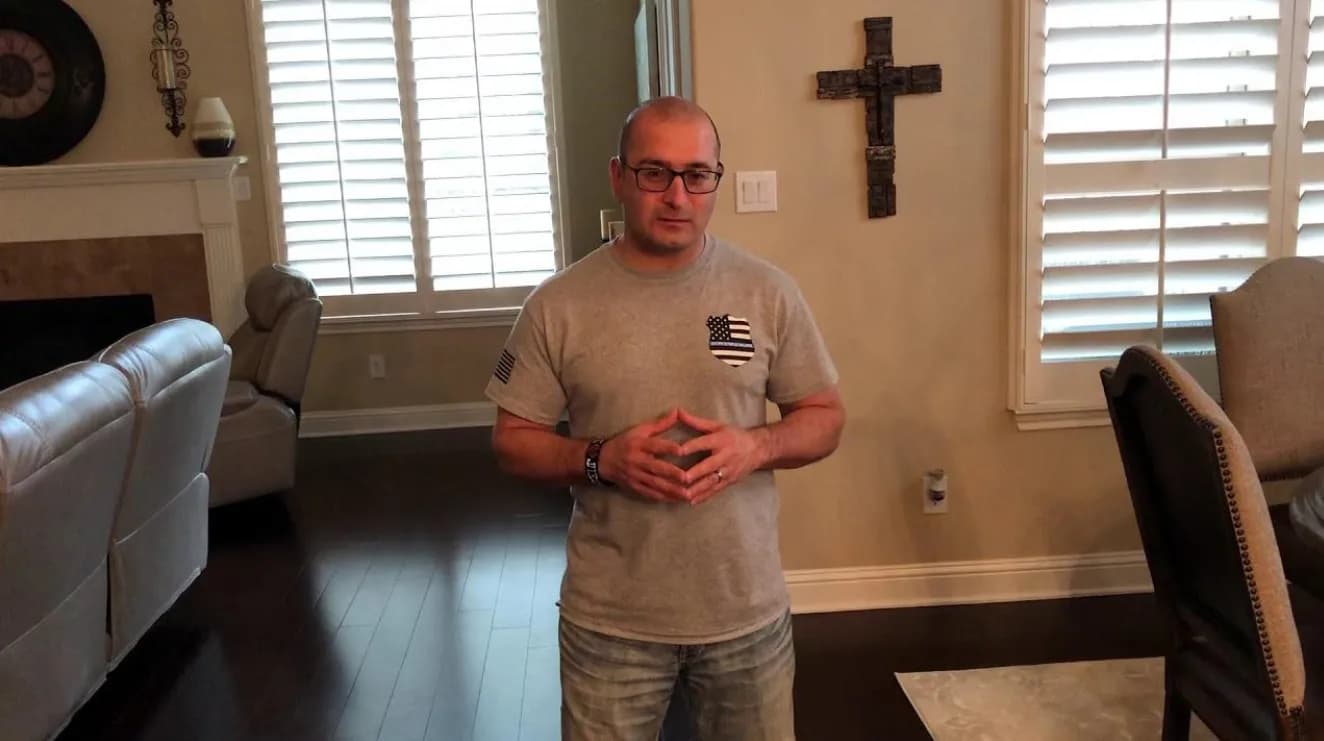
UNIVERSITY HEIGHTS, OHIO — An Orthodox Jewish resident of University Heights, Ohio, is challenging restrictions on religious prayer gatherings in his home, bringing renewed attention to the relationship between religious freedom, Sabbath observance, and local government authority.
Daniel Grand's dispute began in January 2021, when he invited approximately 12 neighbors to gather at his home for Jewish prayers. Grand observes the Sabbath from Friday evening through Saturday evening, during which he refrains from driving in accordance with his religious beliefs.
For Orthodox Jewish communities, communal prayer often involves a minyan, a gathering traditionally requiring at least ten Jewish men. Grand hoped to provide a nearby location where neighbors could pray together without traveling during the Sabbath.
Shortly after he extended the invitations, a neighbor contacted city officials. University Heights subsequently issued a cease-and-desist letter warning that organized religious gatherings at his residence could violate local zoning regulations governing places of worship.
Grand canceled the planned gathering and initially applied for a special-use permit. He later withdrew the application, maintaining that he was not attempting to establish a formal house of worship but simply wanted to pray with neighbors inside his home.
The disagreement eventually reached federal court. Grand argued that the city's actions interfered with his constitutional rights and protections for religious exercise. University Heights maintained that its zoning regulations applied to organized religious assemblies in residential properties.
In November 2025, the U.S. Court of Appeals for the Sixth Circuit upheld a lower court decision favoring the city. The appellate court determined that some of Grand's claims were premature because the city had not issued a final decision on his permit application, while other claims did not establish a sufficient legal basis for relief.
Grand's attorneys and supporting religious organizations continued pursuing the case, arguing that residents should not be required to complete lengthy government approval procedures before challenging restrictions they believe interfere with their religious practices.
In June 2026, the U.S. Supreme Court agreed to hear the dispute, with oral arguments scheduled for December 9, 2026. The case could help clarify when individuals may challenge local government restrictions affecting religious activities in private homes.
The controversy has attracted attention from religious liberty advocates and Jewish organizations concerned about the potential consequences of treating small home prayer gatherings as formal religious institutions.
Supporters of Grand argue that religious exercise inside a private residence deserves strong legal protection. Local governments, meanwhile, maintain authority to establish and enforce zoning requirements designed to regulate property use and protect residential neighborhoods.
The central legal question concerns how those interests should be balanced when religious gatherings take place in private homes.
For the Whole Bible Community, the case carries particular significance because many Sabbath-observant believers gather in homes for prayer, Scripture study, worship, and fellowship rather than attending traditional religious institutions.
Home gatherings have long been an important part of religious life, including among believers seeking to observe the seventh-day Sabbath and biblical feast days.
The dispute illustrates how ordinary religious practices can intersect with local regulations, raising questions about the protections available to individuals and small faith communities.
As Grand's case moves forward, its outcome may help define the legal boundaries between private religious gatherings and municipal zoning authority, with implications for Sabbath-observant families and home fellowships across the United States.
Reference:
adflegal/article/i-just-wanted-to-pray-with-my-neighbors-the-city-said-no/
law.justia/cases/federal/appellate-courts/ca6/24-3876/24-3876-2025-11-13.html
adfmedia/case/grand-v-city-of-university-heights/